A diagnostic tool for designers who know something is wrong with their work but can't name what.
- Pick your phase.
- Answer the questions that hit you.
- Reach a threshold, draw a card, do the task.
- Everything is kept on your answer sheet.
10–20 minutes. Nothing you write leaves your browser.
Journal
00 sessions
Saved only in this browser, nothing you write leaves it. Feedback is optional and anonymous: only your rating and comment are sent.
About
Designers rarely get stuck for lack of ideas or skill. More often, the way they are thinking doesn't match what the moment needs.
This tool helps you notice which state your thinking is in, and gives you one small, concrete step to move on.
Step out of the feed
When a project stalls, the reflex is to open Pinterest or Instagram and scroll until something sparks. It rarely helps. The feed fills your head with other people's answers and leaves the real question unasked: what is happening in my own process?
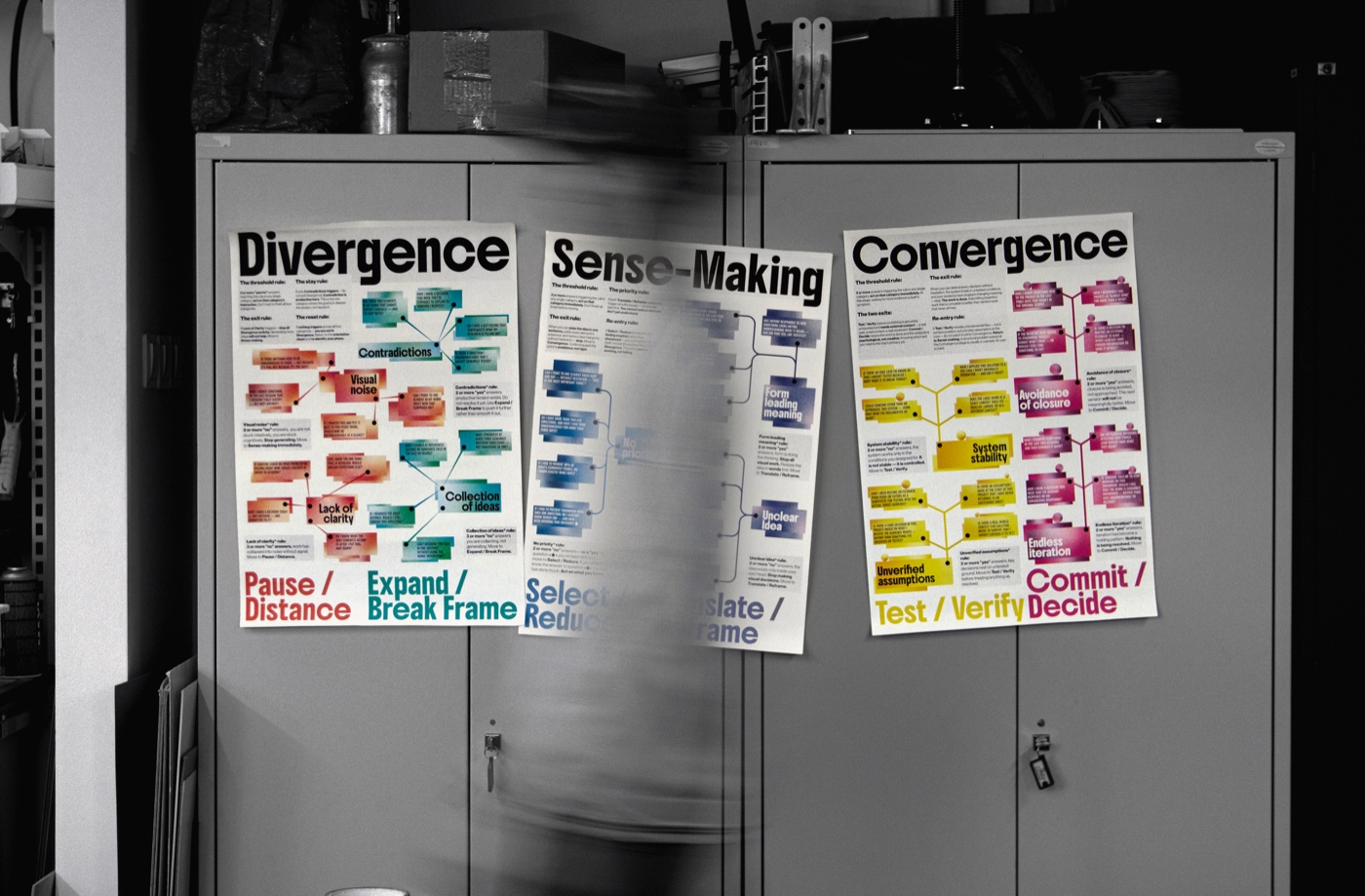
Design States asks you to put the references away and look inward. Three phases, Divergence, Sense-Making and Convergence, map the states every design process moves through. Simple yes/no questions show where you are and what is holding you back: too many ideas, no priority, endless iteration. When a threshold is reached, an action card gives you one short task to get moving again. Not a solution, a nudge.
Over time you learn your own patterns: where you get lost and what brings you back. Use it under a deadline or in your free time, during burnout or a long stuck phase, whenever you need a calm way to understand your work instead of another hour of scrolling.
How the scoring works
- 1
Answer
Four yes/no questions per category.
- 2
Count
One answer per question counts. Each fills a square.
- 3
Act
Reach the threshold, draw a card. One card per category in each session, one redraw.
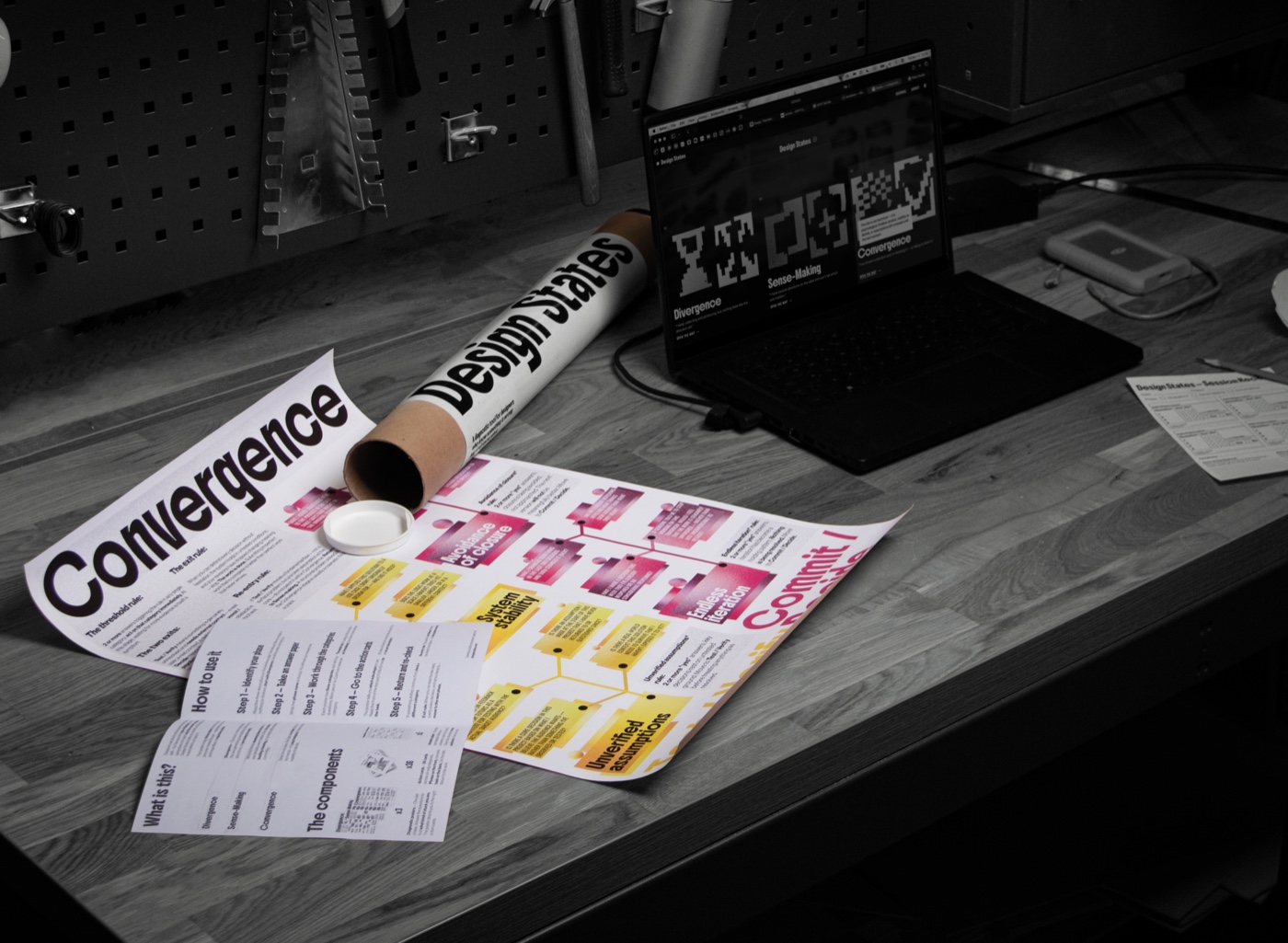
The physical kit
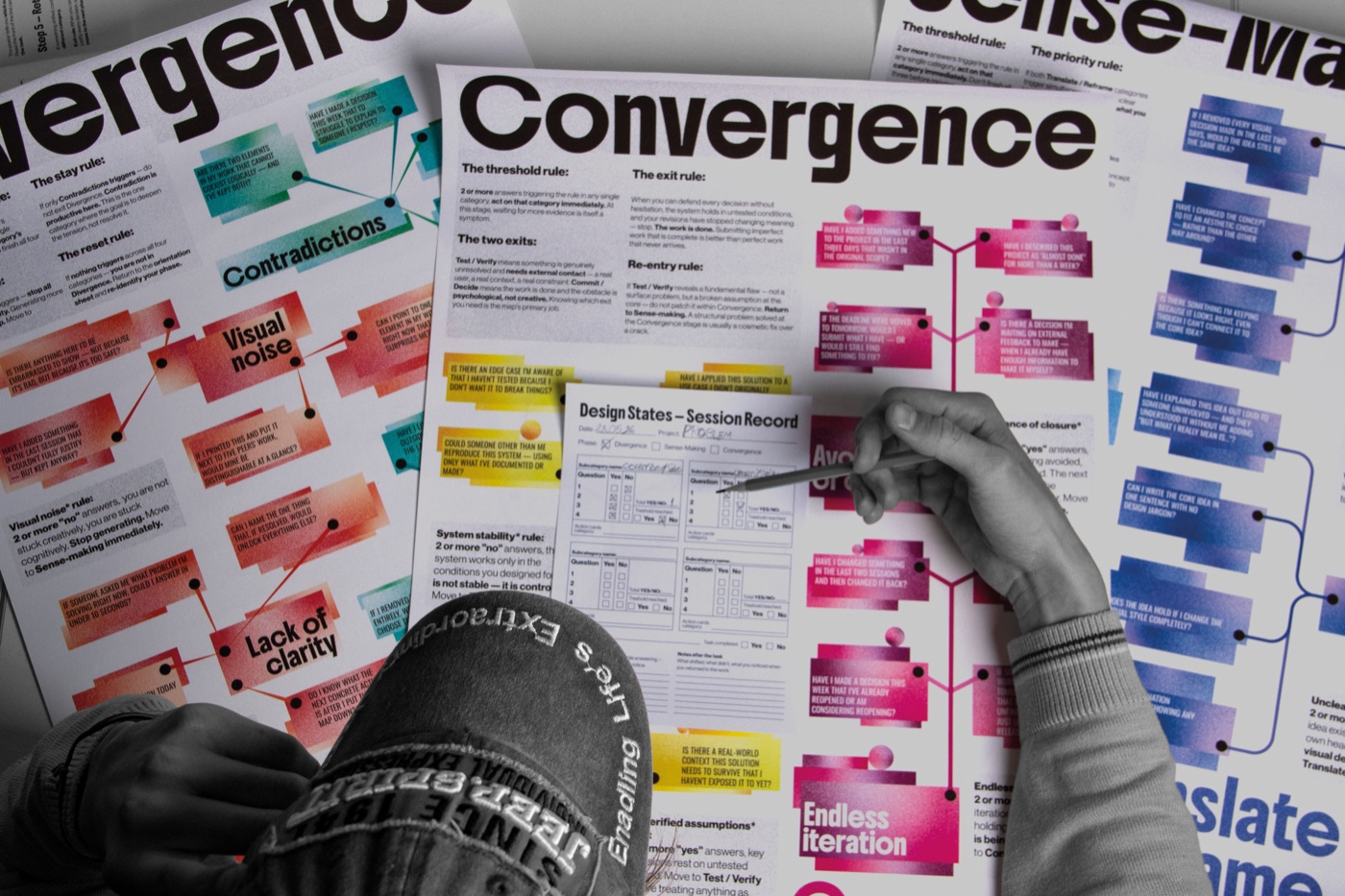
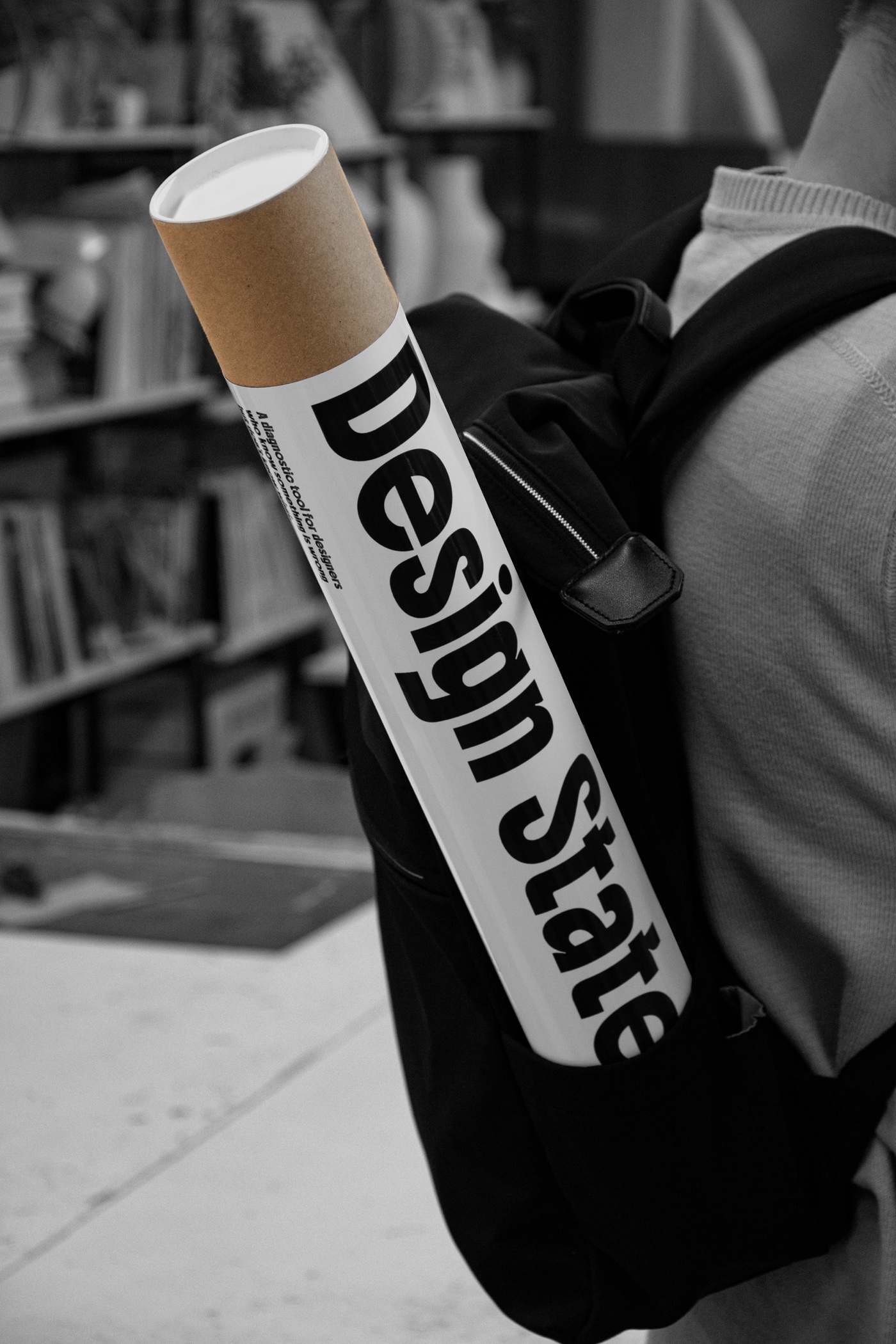
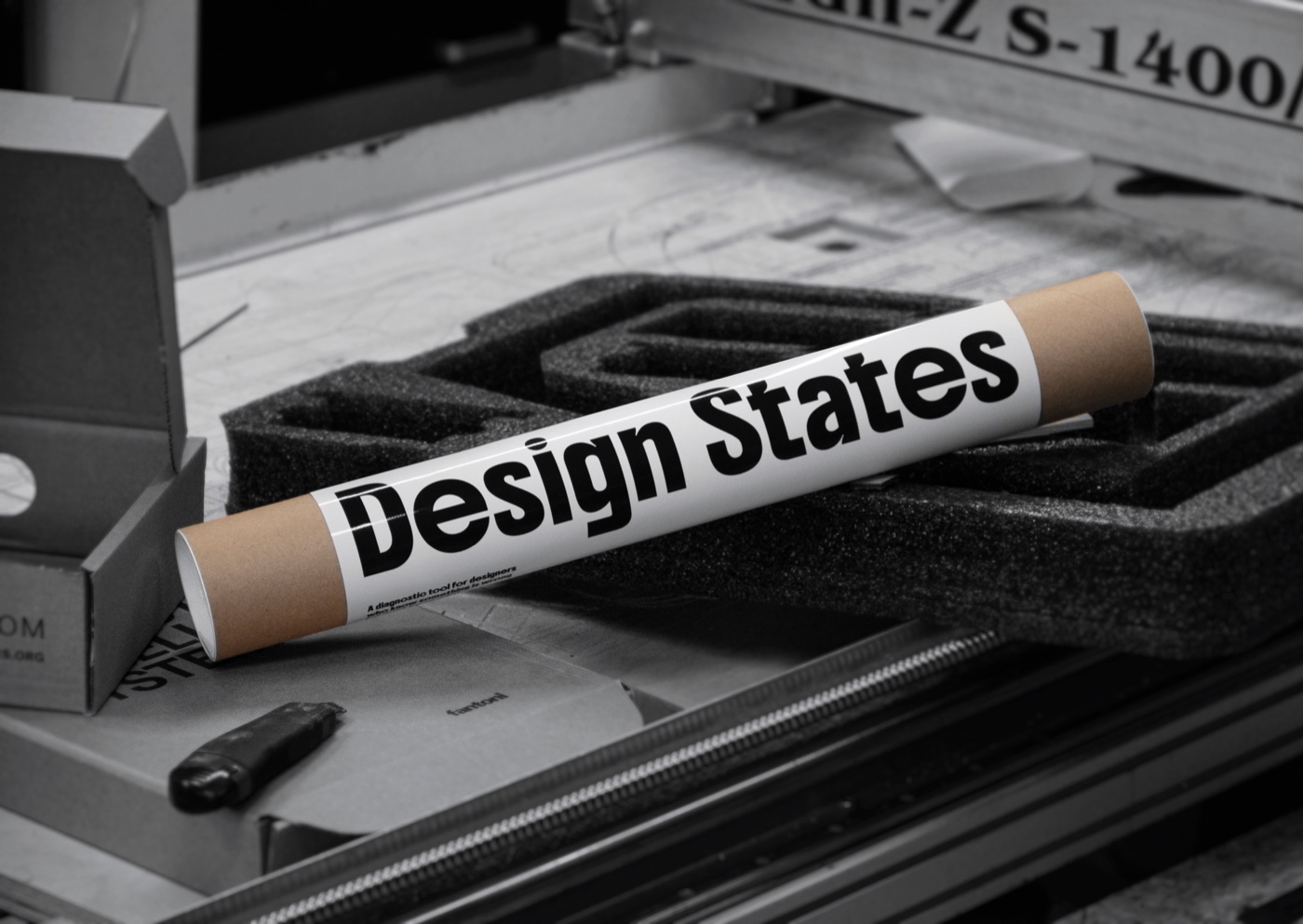
Design States was made first as a physical kit. One tube holds three A2 posters, one map for each phase, 36 cards, a booklet that explains the method and answer sheets for recording a session. You spread the posters on the table, draw the cards and write on the sheets. This website is the digital version of the same kit: the maps are the posters, the decks are the cards.